

Driving through mountainous terrain is one of the most demanding tasks you can ask of your truck or SUV. While conquering steep inclines requires plenty of engine torque, coming back down safely places the entire burden on your vehicle’s braking system.
When descending a long mountain pass, gravity constantly pulls thousands of pounds of steel down the grade. If you rely solely on your brake pedal to fight that momentum, your brakes can quickly become overwhelmed, leading to structural component failure or sudden stopping power loss.
Understanding why brakes fail on steep mountain descents-and implementing proper high-altitude driving habits-is essential for protecting your vehicle and your passengers.
1. Severe Brake Fade (Glazed Pads)
Brake fade occurs when the friction material on your brake pads gets so hot that it loses its ability to grip the steel rotors. When drivers constantly rest their foot on the brake pedal down a mountain pass, temperatures can spike past $1,000^circtext{F}$. At this temperature, the binding resins inside the brake pads begin to vaporize, creating a thin layer of hot gas between the pad and the rotor. Your pedal will still feel firm, but the vehicle simply won’t slow down because the pads are hydroplaning on gas.
- How to Prevent It: Practice “snub braking.” Instead of keeping light, constant pressure on the pedal, apply firm braking pressure to drop your speed by 5-10 mph, then completely release the pedal to let the airflow cool the assemblies before applying them again.
2. Boiling Brake Fluid
Unlike brake fade where the pedal stays firm, vapor lock inside your hydraulic lines causes the brake pedal to sink all the way to the floorboard with zero resistance. Brake fluid is designed to withstand intense heat, but as it ages, it absorbs moisture from the air.
During heavy braking on steep grades, that extreme heat transfers from the pads into the caliper pistons and boils the moisture trapped in the fluid. While liquid cannot be compressed, gas bubbles can. When you step on the pedal, you merely compress the gas bubbles rather than pushing mechanical force to the brake calipers.
- How to Prevent It: Flush and replace your brake fluid every two years, or more frequently if you regularly tow heavy loads through mountain ranges.
3. Overloaded Vehicles and Massive Rolling Mass
Many trucks and SUVs navigating mountain roads are packed to maximum capacity with camping gear, or they are actively towing heavy trailers. Furthermore, aftermarket modifications like heavy steel bumpers, winches, and oversized off-road tires drastically increase a vehicle’s rolling inertia. If your braking system is built to stop a stock vehicle, forcing it to stop an overloaded rig on a 7% downward grade will cause it to overheat exponentially faster.
- How to Prevent It: Always stay within your vehicle’s Gross Vehicle Weight Rating (GVWR) and install a high-quality trailer brake controller to ensure the trailer assists in slowing its own weight.
4. Thin, Worn-Out Brake Rotors
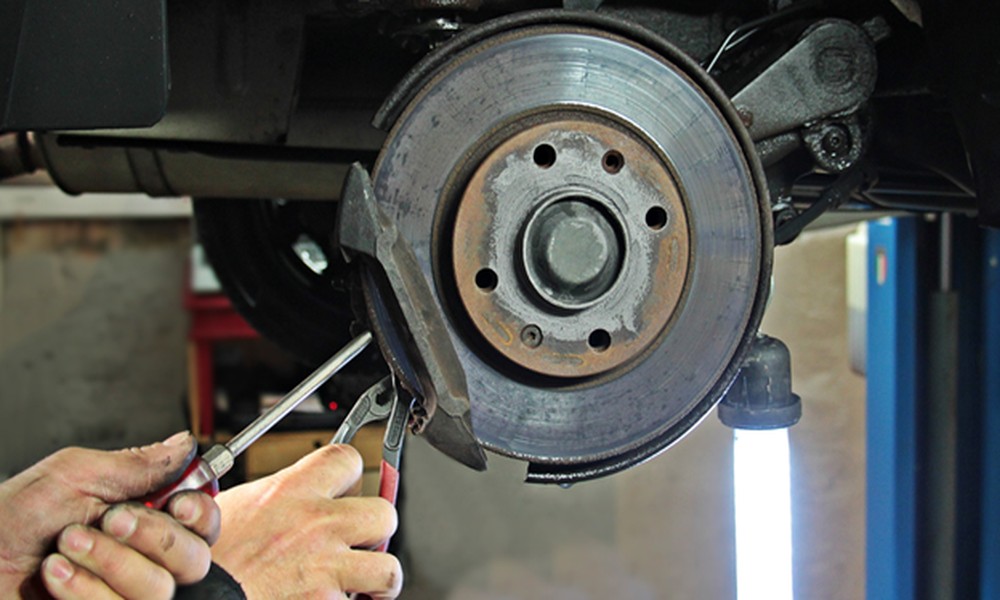
Brake rotors act as a heat sink; they absorb the extreme thermal energy generated by friction and dissipate it into the surrounding air. When rotors are machined too thin during previous brake jobs, or if they are heavily worn, they lose their thermal mass. Thin metal heats up much faster and cannot shed the thermal energy efficiently, leading to rapid brake fade, structural warping, and intense steering wheel vibrations.
- How to Prevent It: Never skip inspecting rotor thickness during routine maintenance. If your rotors are close to their minimum wear thickness discard limit, replace them before taking a mountain trip.
5. Using the Wrong Brake Pad Compounds
Not all brake pads are engineered equally. Economy or budget-tier ceramic pads are optimized for quiet city commuting and low dust production, but they struggle to handle the high heat cycles of heavy-duty mountain driving. If you put commuter pads on a heavy truck or SUV and head into steep terrain, the friction material can quickly crack, crumble, or disintegrate under extreme stress.
- How to Prevent It: Upgrade to severe-duty semi-metallic or performance ceramic pads designed explicitly for trucks, SUVs, and towing applications.
6. Failure to Utilize Engine Braking
The number one behavioral cause of mountain brake failure is failing to use your vehicle’s transmission to control your speed. Relying entirely on the wheel brakes to fight gravity down a multi-mile descent is a recipe for mechanical disaster.
- How to Prevent It: Manually downshift your automatic or manual transmission into a lower gear (such as 2nd or 3rd gear, or switching into “Tow/Haul” mode) before you start heading down the mountain. This forces the engine’s internal compression to naturally hold the vehicle back, keeping your foot off the brake pedal and allowing your braking system to remain cool and ready for emergency stopping situations.
Mountain driving presents a unique mechanical challenge that quickly exposes any underlying weakness in your vehicle’s stopping hardware. Taking a few proactive steps before hitting high-altitude passes can save you from a terrifying emergency scenario on the road.
If you notice a soft pedal, squealing, or reduced stopping power after your latest trek, getting an expert inspection is paramount. Scheduling a professional truck brake repair Denver service ensures that your rotors, calipers, and hydraulic fluids are fully rated, pressure-tested, and optimized to handle the steepest grades safely.